Danny’s green metal combination lockbox
Doctor SleepDanny’s green metal combination lockbox gives Dan Torrance a tangible pattern for protecting his mind from ghosts: learn an object closely, reproduce it inwardly, and use that imagined container to imprison the spirits drawn to his shining. A child’s present becomes more than storage. Its metal body and keypad make an abstract mental defense concrete, while the ghosts’ muffled cries and eventual silence reveal the cost—and the apparent effectiveness—of the method Dick Hallorann teaches.
A present designed as a lesson
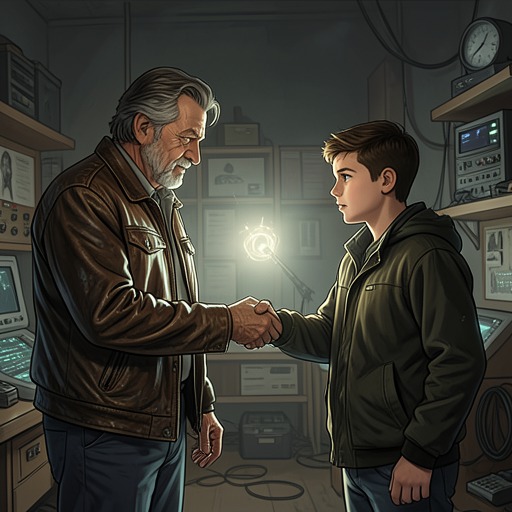
Dick gives Dan the box after explaining what his own grandmother taught him about spirits. Some angry dead refuse to leave the world; most eventually starve away, but some find food in the shining. Dan’s ability, Dick explains, is therefore both a beacon and a vulnerability: without meaning to, he feeds the spirits that return to him. His grandmother’s lesson was to turn against them what they came seeking. The box translates that inherited knowledge into a practical exercise.
The present is made of green-painted metal, with a small keypad beneath its latch. Dick bought it at Western Auto and contrasts its five-number combination with the padlock and little key he wore around his neck as a child. That older lock had been given to Dick by Gramma Rose; the keypad, he says, belongs to the modern age. The difference is functional, but the object also carries a teaching across generations: Gramma Rose’s method reaches Dan through Dick, adapted from a keyed lock to a combination box.
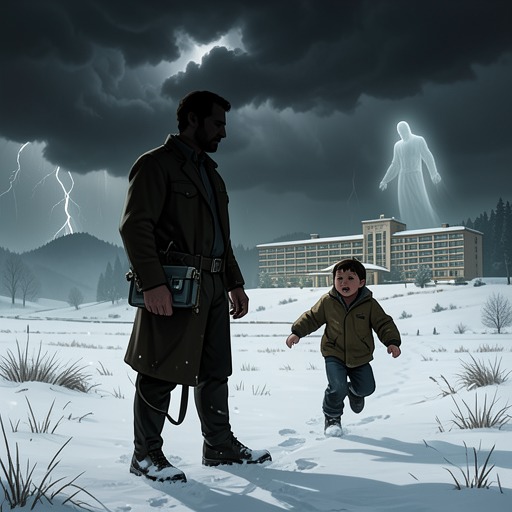
Dan is delighted and imagines keeping prized possessions inside: baseball cards, his Cub Scouts Compass Badge, a lucky green rock, and a photograph of himself with his father on the lawn of their apartment building in Boulder, before the Overlook and before things turned bad. The photograph places a fragile family memory among the things the child wants to keep safe. Dick accepts that use but gives the gift a more urgent purpose: Dan must know the box intimately, not simply look at it. He is to touch it all over, feel it, and smell inside, until it becomes a close companion. Sensory attention is preparation; the physical object must be familiar enough to reconstruct within the mind.
From physical object to mental defense
Dick tells Dan to create another box just like the gift inside his mind, an even more special one. The instruction makes the actual lockbox a model rather than the final instrument. Its latch and code establish a form that Dan can reproduce mentally, while the physical act of studying its surfaces gives him details to hold onto when danger appears. The method depends on Dan’s own shining: the same capacity that allows spirits to find nourishment can be used to confine them.
A week later, Mrs. Massey returns in the bathtub, where she died. This time Dan is not surprised, and he does not flee. He enters and closes the bathroom door, while his mother watches Three’s Company in the other room. Mrs. Massey beckons with a smile; Dan approaches smiling too and tells her he has brought something. At the last moment she understands and screams. The encounter turns Dick’s lesson into action: the child who had been frightened by the ghost now chooses the meeting and controls its outcome.
Afterward, the physical box’s inward counterpart occupies a special shelf deep inside Dan’s head. From there he hears Mrs. Massey’s muffled screaming and expects it to stop; it does. The lockbox does not merely shield him from seeing her. It gives the haunting an interior location and a boundary, converting a returning presence into a captive sound that gradually falls silent.
Repeated use and the promise of safety
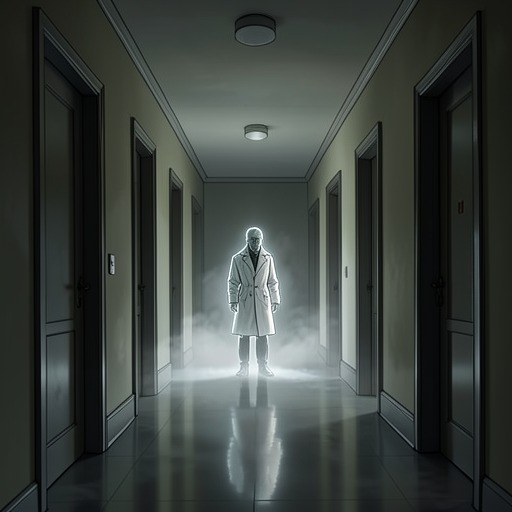
Two years later, Horace Derwent appears to Dan in a deserted stairwell at Alafia Elementary, wearing a suit with confetti on its shoulders and carrying a little black mask in one decaying hand. Dan walks away quickly. After school he calls Dick long-distance at the restaurant where Dick works in Key West and asks how many boxes he can have in his head. Dick answers that he can make as many as he needs, and reveals that his own Black Grampa was not the only ghost he had to lock away. The method is not a one-time trick, but a repeatable practice for someone whose shining keeps drawing spirits near.
Soon after New Year’s, the onetime owner of the Overlook appears again, this time in Dan’s bedroom closet. Dan is ready: he enters the closet and closes the door. A second mental lockbox is placed on the high shelf beside Mrs. Massey’s. This time the captive ghost pounds and curses inventively; then the noise stops. Silence comes from both boxes. Whether the spirits remain alive in an undead fashion no longer matters to Dan. What matters is that they cannot get out, and that he feels safe.
What the box contains—and what it cannot promise
The lockbox’s success is real within Dan’s childhood experience, but the narrative qualifies the security he draws from it. He believes he is safe from the ghosts, just as he believes he will never drink after seeing what alcohol did to his father. The parallel makes the box an image of control that is powerful but limited: it contains the immediate threat of the dead, yet cannot guarantee that Dan will avoid every danger or repeat of the past. Its silence marks the end of these hauntings, not the end of vulnerability.
As an object, the box joins practical design to inherited knowledge and psychic action. The numbered keypad offers a deliberate way to close and reopen a container; the mental version lets Dan impose a boundary where ordinary locks cannot help. Its meaning changes from a place for treasured possessions to a tool for containing the dead, but the first purpose remains resonant: Dan wants to protect what matters from forces that have already damaged his family. The method’s compact physical model—familiar metal, latch, code, and imagined shelf—makes an otherwise invisible struggle legible, and gives the boy a way to turn the power that exposes him into protection.